
With the advancement of science and technology, we have become heavily dependent on various electronic gadgets. There is no doubt that devices have significantly made our lives easier than in previous times. But, have you ever truly realized the hidden cost of excessive gadget use? There are endless negative effects of overusing electronic devices that quietly erode our health and happiness.
Let’s understand the real dangers and how they impact your daily life.
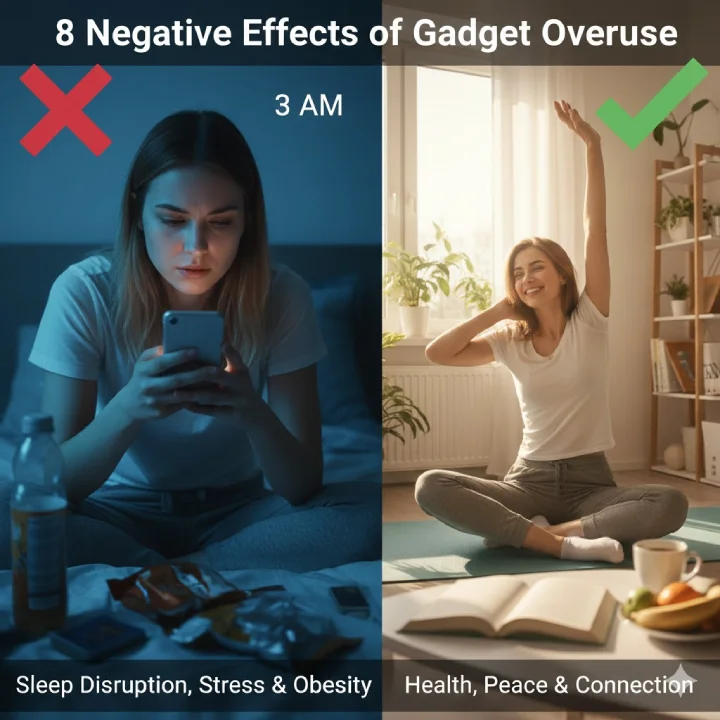
Table of Contents
The Hidden Costs of Constant Screen Time
1. Chronic Fatigue and Physical Pain
People often become physically and mentally lazy when they use gadgets excessively. You might feel entertained seeing a movie or playing games, but after a certain period, your eyes and body will be tired of staring at the same spot for hours. People often suffer from back pain, neck stiffness, and poor posture (known as ‘Tech Neck’) as they sit motionless for a long time. Normal physical activities are hampered badly. If you want to become physically fit, you must consciously avoid the reckless use of electronic devices.
2. Insomnia and Sleep Disruption (Blue Light Effect)
Sleep is vital for human beings. People who watch movies, play games, or engage in other activities on mobile phones or laptops right before or while going to sleep often suffer from insomnia. The Blue Light emitted by screens disrupts the normal cycle of sleep and wakefulness (Circadian Rhythm) by suppressing the sleep hormone, Melatonin. The overuse of gadgets is cutting one’s sleeping time, causing several physical and mental illnesses and disrupting the normal sleep cycle.
3. Increased Stress and Anxiety
People who use gadgets for a long time often get stressed because they remain constantly ‘on’ and hyper-involved in one digital space. You need fresh air, friends, nature, and many other things to naturally cut down your stress and anxiety. There is hardly any scope to go outside and enjoy nature for a “gadget freak” person. Such high, sustained stress can negatively affect your heart, mental health, and emotional stability. Constant notifications also keep the brain in a state of high alert, increasing overall anxiety levels.
4. Obesity and Poor Health
Gadgets make people lazy and overweight as they hardly move around. Obesity is a common problem among people addicted to gadgets. Many people enjoy having unhealthy snacks, chips, and fizzy drinks while watching TV or playing games—this practice, combined with inactivity, may lead to extreme obesity.
Remember: nothing but regular physical activities and a healthy lifestyle can keep you healthy. You must limit the use of gadgets if you want to stay well and manage your weight.
5. Hijacked Quality Time
Nowadays, people remain very busy with their daily tasks. Moreover, the excessive use of gadgets ruthlessly hijacks your bonding time with your family and friends. You should pass quality time with your near ones to create better memories instead of wasting your time on a screen. You could be exploring new places or gearing up for a trip with your family. But if you remain busy with gadgets all day, you will be deprived of the quality time you could have passed with your near and dear ones.
6. Deterioration of Reading Habits
Reading books is universally appreciated as the storehouse of knowledge. But, excessive gadget use severely kills your reading habit. People spend hours mindlessly scrolling on social media but become reluctant to read books or meaningful long-form content. This puts a very negative impact on a person’s cognitive skills and overall knowledge. Smartphones and laptops have subtly taken the place of books, seriously hampering the appreciation of art, culture, and literature. Next time, think twice before spending time on devices instead of picking up a good novel.
7. Severe Impact on Children’s Development
Children become the worst sufferers of excessive gadget use. Children become addicted very easily, and this is highly detrimental to their development. Their parents and guardians should take immediate steps to intervene.
Children lose their concentration span and develop shorter attention capabilities when they use gadgets for a long time. Moreover, regular screen time makes kids less active and playful. Lower academic performance, aggressive behavior, and loss of vision are common issues among children who continuously use gadgets.
8. Social Isolation and Mental Health Risk
Humans are social beings, but gadget addicts often prefer to stay alone in the digital world. As a result, they become socially isolated from their real-world community. You may lose friends and social interaction due to the overuse of technology. Remember, you need someone real to share your feelings with; you can’t share your deepest likings and dislikes with an electronic device. If you become addicted to mobile phones or laptops, you might be at a high risk of losing your genuine connection with people around you, leading to loneliness and mental depression.
FAQs
What is ‘Blue Light’ and why is it harmful for sleep?
Blue light is the wavelength emitted by screens. It tricks your brain into thinking it is daytime, which suppresses the production of Melatonin (the sleep hormone), making it harder to fall asleep and disrupting your sleep cycle.
How much screen time is considered ‘excessive’ for adults?
While the ideal time varies, experts suggest limiting non-work-related screen time (social media, gaming) to under 2 hours per day. Crucially, you should stop screen use at least one hour before bedtime.
How does excessive gadget use cause back pain?
Prolonged, static posture while using devices leads to strain on the neck and back muscles, often resulting in ‘Tech Neck’ and chronic lower back pain due to inactivity and poor seating habits.
What is the best way to control screen time addiction?
The best approach is setting firm boundaries (e.g., ‘No phone in the bedroom’), tracking your usage, and replacing screen time with real-world activities like physical exercise or face-to-face social interaction.